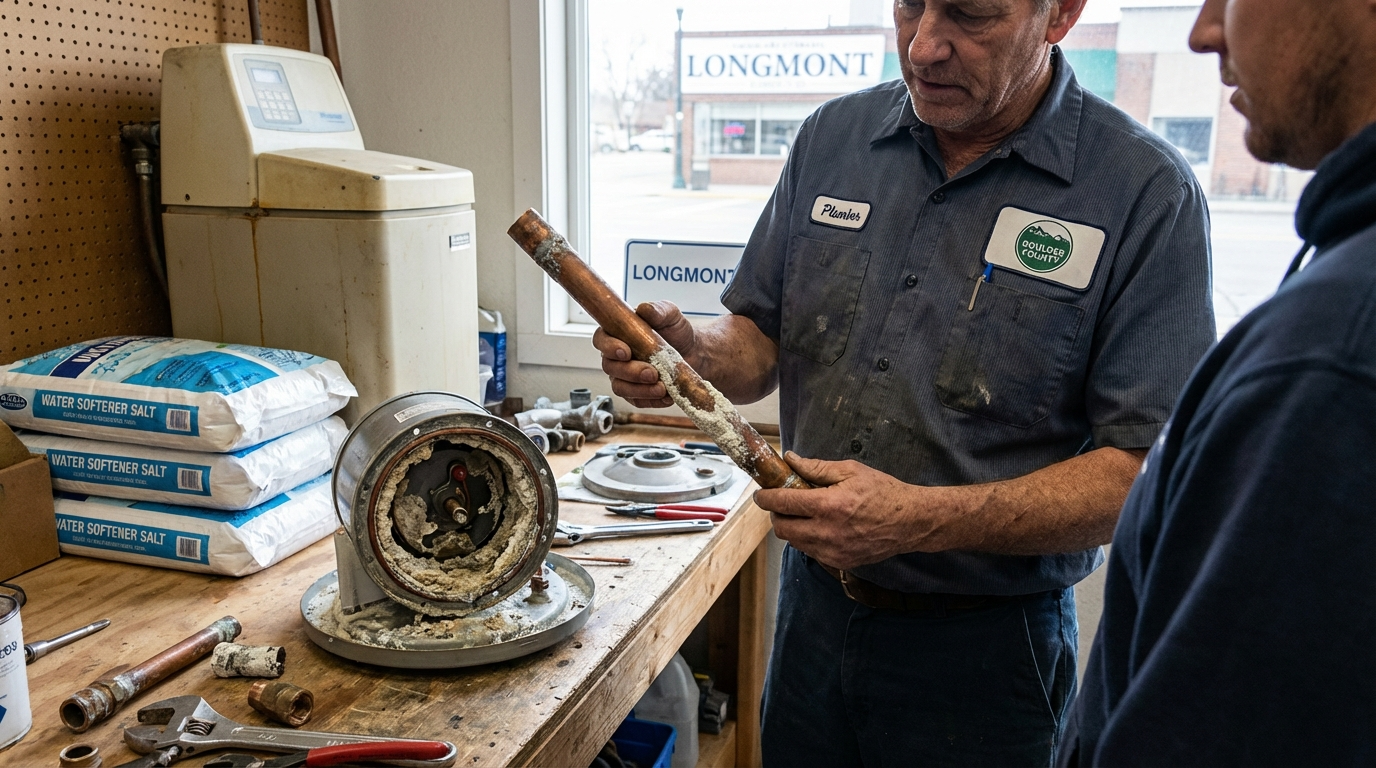

If you've noticed white spots on your faucets, reduced water pressure, or your water heater isn't lasting as long as it should, you're likely dealing with hard water. Here in Longmont and throughout Boulder County, hard water is extremely common—and it can do a number on your plumbing system over time.
As a local plumber who's worked in homes across Old Town Longmont, Prospect, Spring Valley, and surrounding neighborhoods, I've seen firsthand how hard water affects plumbing. The good news? Once you understand what's happening, there are practical steps you can take to protect your home.
Let me walk you through what hard water is, why it's so prevalent in our area, and what you can do about it.
What Is Hard Water?
Hard water isn't unsafe to drink—it just contains high levels of dissolved minerals, primarily calcium and magnesium. These minerals get picked up as water travels through underground rock formations before reaching your home.
Water hardness is measured in grains per gallon (GPG). Anything above 7 GPG is considered hard, and Longmont's water typically ranges between 8-12 GPG depending on your neighborhood and water source.
You can't see these minerals in your glass of water, but you'll definitely notice their effects around your home.
Why Is Hard Water So Common in Longmont?
Colorado's geology is the main reason. Our water comes from mountain snowmelt and underground aquifers that flow through limestone and other mineral-rich rock formations. As water passes through these layers, it absorbs calcium, magnesium, and other minerals.
Whether you're in Old Town near Main Street, out in Spring Valley, or over in the Prospect neighborhood, you're getting water that's traveled through Colorado's mineral-dense geology. That's just part of living along the Front Range.
The city treats our water to make it safe, but they don't remove the minerals that cause hardness—that's something homeowners need to address on their own if they want to protect their plumbing.
How Hard Water Damages Your Plumbing System
Mineral Buildup Inside Pipes
Every time hard water flows through your pipes, tiny amounts of calcium and magnesium are left behind. Over months and years, this buildup—called scale—accumulates on pipe walls.
This is especially problematic in older homes throughout Longmont where galvanized steel pipes were common. The scale gradually narrows the pipe opening, restricting water flow and increasing pressure on your plumbing system.
Water Heater Problems
Your water heater takes the biggest hit from hard water. When water is heated, minerals separate out and settle at the bottom of the tank as sediment.
This sediment layer acts like insulation between the heating element and the water, forcing your water heater to work harder and use more energy. It also causes that rumbling or popping sound you might hear—that's the sound of water trying to bubble up through the sediment layer.
In Longmont, I regularly see water heaters fail 3-5 years earlier than they should because of hard water damage. A tank that should last 10-12 years might only make it to 7 or 8.
Visible Spots and Stains
Those white, chalky deposits on your faucets, showerheads, and glass shower doors? That's dried mineral residue. It's not just unsightly—it also provides a rough surface where bacteria can grow and makes fixtures harder to clean.
Chrome and stainless steel fixtures are especially prone to showing these spots, and over time, the mineral buildup can actually corrode the finish.
Reduced Water Pressure
When scale builds up inside pipes and on faucet aerators, water has less space to flow through. You'll notice this as gradually declining water pressure throughout your home.
Showerheads are usually the first place homeowners notice reduced pressure, but it's happening throughout your entire plumbing system.
Appliances Wear Out Faster
Any appliance that uses water—your dishwasher, washing machine, ice maker, even your coffee maker—suffers from hard water. Mineral deposits clog spray arms, coat heating elements, and reduce efficiency.
Dishwashers develop buildup that prevents dishes from getting fully clean. Washing machines use more detergent to compensate for hard water, and their internal components wear out faster.
Warning Signs You Have Hard Water Problems
Watch for these common indicators:
- White or greenish stains around faucets and drains
- Soap doesn't lather well or leaves a film on skin
- Dishes come out of the dishwasher with spots
- Laundry feels stiff or looks dingy even after washing
- Declining water pressure over time
- Your water heater makes rumbling or banging noises
- Increased energy bills as appliances work harder
- Frequent need to replace faucet aerators or showerheads
What You Can Do About Hard Water
Install a Water Softener
A whole-house water softener is the most effective long-term solution. These systems use a process called ion exchange to remove calcium and magnesium before water enters your plumbing.
Softened water protects your pipes, extends appliance life, reduces soap and detergent use, and eliminates those annoying spots on fixtures. For most Longmont homes, it's an investment that pays for itself over time through reduced repairs and longer-lasting appliances.
Flush Your Water Heater Annually
Even if you don't install a water softener right away, flushing your water heater once a year removes sediment buildup and extends its life. This is something many homeowners can do themselves, though we're always happy to handle it during a maintenance visit.
Clean Aerators and Showerheads Regularly
Remove faucet aerators and showerheads every few months and soak them in white vinegar overnight. This dissolves mineral buildup and restores water flow. It's a simple maintenance task that makes a noticeable difference.
Use Descaling Products
For appliances like dishwashers and coffee makers, run a descaling solution through them periodically according to the manufacturer's instructions. This removes mineral deposits and keeps them running efficiently.
When to Call a Professional Plumber
Some hard water issues are DIY-friendly, but others need professional attention:
Call a plumber if you notice:
- Significant drop in water pressure throughout your home
- Your water heater is making loud noises or not heating properly
- Visible corrosion or leaking around pipes and fixtures
- You're considering installing a water softener system
- Persistent clogs that cleaning aerators doesn't fix
- Your water heater is approaching 8-10 years old
Professional leak detection can also identify hidden damage from hard water before it becomes a costly emergency. We use specialized equipment to find problems inside walls and under slabs that homeowners can't see.
Regular Plumbing Inspections Matter
Throughout neighborhoods like Hover Acres and Fox Grove, I recommend homeowners schedule a plumbing inspection every 2-3 years, especially in homes over 15 years old.
During an inspection, we check for scale buildup, examine your water heater condition, test water pressure, and look for early signs of corrosion or leaks. Catching problems early saves money and prevents emergency repairs down the road.
If you're buying a home in Longmont, a plumbing inspection is especially important. Many older homes have significant hard water damage that isn't obvious during a standard home inspection.
The Bottom Line on Hard Water
Hard water is a fact of life in Longmont and throughout Boulder County. It's not going to hurt you, but it will gradually damage your plumbing system, shorten appliance life, and cost you money in repairs and higher utility bills.
The good news is that with proper maintenance and the right solutions, you can protect your home from hard water damage. Simple habits like regular cleaning and flushing your water heater help, and installing a water softener provides comprehensive protection.
Every home is different, so what works best depends on your water hardness level, your plumbing system's age, and your budget. The key is staying proactive rather than waiting for problems to develop.
Need Help With Hard Water Issues?
If you're dealing with hard water problems in your Longmont home, we're here to help. At Mayer Plumbing, we've been serving families throughout Boulder County for years, and we understand the unique challenges our local water presents.
We can test your water hardness, inspect your plumbing system for damage, recommend solutions that fit your needs and budget, and provide honest, upfront pricing before any work begins.
Whether you need water heater maintenance, want to discuss water softener options, or have noticed declining water pressure, give us a call at (303) 532-7597. We offer same-day service when you call before midday, and we're available 24/7 for plumbing emergencies.
Visit us online at mayerplumbing.net to learn more about our services or schedule an appointment. We're proud to serve Longmont, and we're committed to keeping your home's plumbing system running smoothly for years to come.
Frequently Asked Questions
How do I know if I have hard water?
Common signs include white spots on fixtures, soap that doesn't lather well, stiff laundry, spotted dishes, and declining water pressure. You can also purchase an inexpensive test kit at hardware stores or contact your local water provider for hardness information.
Will a water softener solve all my hard water problems?
A water softener prevents future mineral buildup and protects your plumbing, but it won't remove existing scale inside pipes or appliances. You may need professional cleaning or repairs to address damage that's already occurred.
How much does a water softener cost?
Whole-house water softener systems typically range from $800-$2,500 depending on size, features, and installation complexity. We provide upfront pricing and can explain your options based on your home's specific needs.
Can hard water damage my water heater permanently?
Yes, severe mineral buildup can crack the tank, corrode the heating element, and cause leaks. Regular maintenance and flushing can extend your water heater's life, but heavily damaged units may need replacement.
Is hard water safe to drink?
Absolutely. Hard water is safe to drink and actually provides dietary calcium and magnesium. The minerals only cause problems for your plumbing system and appliances, not your health.
How often should I have my plumbing inspected?
We recommend inspections every 2-3 years for homes with hard water, or more frequently if you have an older plumbing system. Annual water heater flushing is also a good preventive measure.